Every care home shares the same goal: keeping residents safe from infection.
That’s why cleaning routines, hand hygiene, and infection prevention protocols are part of everyday life. High-touch surfaces are disinfected, communal areas are cleaned regularly, and staff work hard to reduce the risk of illness spreading throughout the home.
So why are infection rates still increasing?
It’s a question many care home managers are asking. If cleaning standards have improved and infection control remains a top priority, what’s changed?
The answer isn’t that care homes are doing less. In many cases, they’re doing more than ever before. The challenge is that today’s infection risks are more complex. Residents are living longer with multiple health conditions, many are returning from hospital with increased care needs, and some harmful bacteria have developed ways to survive routine cleaning if the wrong products are used.
One infection has become a particular concern.
It’s called Clostridioides difficile, or C. diff for short. Although many people outside healthcare may not be familiar with the name, it’s one of the most common healthcare-associated infections in England and a growing challenge for care homes caring for older and medically vulnerable residents.
Recent figures from the
UK Health Security Agency (UKHSA) show just how significant the issue has become.
Cases of C. diff in England increased by 33% between the 2020/21 and 2023/24 financial years, reaching their highest level since 2011/12. Every
UKHSA region recorded an increase, with the North West reporting the highest rate at 48.1 cases per 100,000 people.
These figures don’t suggest that care homes are failing. They highlight a changing infection landscape—one that requires managers to look beyond routine cleaning and consider whether their infection prevention strategy is equipped to deal with today’s risks.
What's Behind the Increase?
There isn’t a single reason why C. diff cases have risen across England. Instead, several factors have combined to make infection prevention more challenging.
Care home residents are generally older and often live with multiple long-term health conditions that weaken the immune system. Many have recently been discharged from hospital, where antibiotic use is common.
While antibiotics play an essential role in treating bacterial infections, they can also disrupt the natural balance of bacteria in the gut, creating an opportunity for C. diff to grow.
Unlike many other bacteria, C. diff has another advantage—it can survive in the environment for long periods by producing spores, making it much harder to remove from contaminated surfaces.
Understanding how these spores behave is key to understanding why some outbreaks are so difficult to control—and why choosing the right disinfectant matters just as much as cleaning regularly.
What Does a C. diff Outbreak Mean for Your Care Home?
Statistics tell us that C. diff is becoming more common. But behind every reported case is a care home managing a situation that can quickly become disruptive.
An outbreak doesn’t just affect the resident who becomes unwell. It can change the way the entire home operates.
Residents with suspected or confirmed C. diff may need to be cared for separately to reduce the risk of the infection spreading. Staff spend more time following enhanced infection control procedures, cleaning schedules become more intensive, and teams must remain vigilant to prevent further cases.
At the same time, managers are balancing day-to-day care with a growing list of additional responsibilities. Families need regular updates, staff require clear guidance, and every action taken—from cleaning routines to infection control measures—needs to be properly documented.
If several residents are affected, the disruption can become even greater. New admissions may need to be delayed while the outbreak is brought under control, placing additional pressure on occupancy, staffing, and daily operations.
For most care homes, the biggest cost isn’t just financial. It’s the time, resources, and pressure that come with managing an outbreak while continuing to deliver safe, high-quality care.
That’s why prevention is always the better strategy.
Preventing infections isn’t simply about cleaning more often. It’s about understanding the specific risks you’re facing and making sure the products you’re using are designed to deal with them.
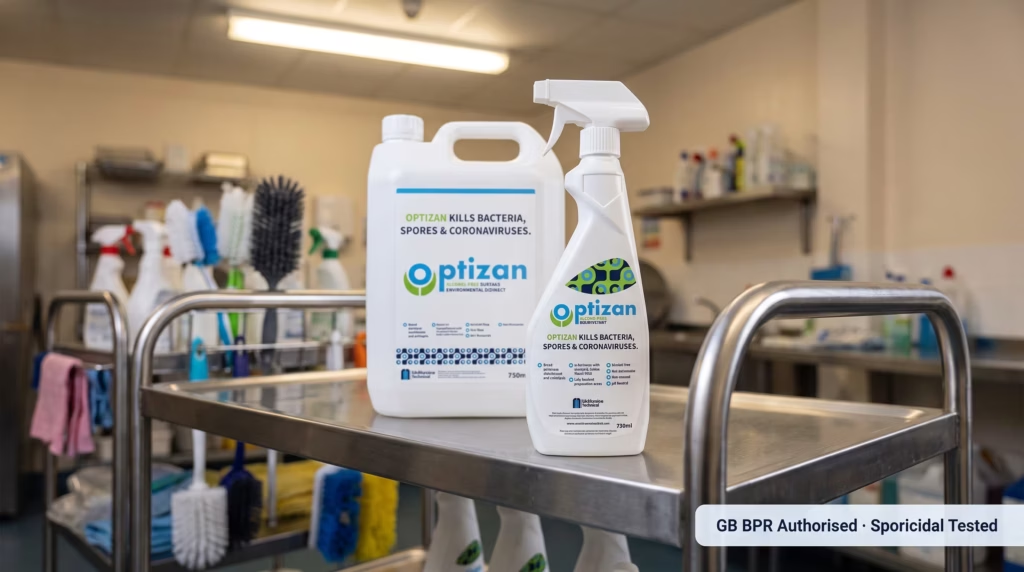
Optizan® Care Home Pack
Optizan® is used by care homes across the UK for surface disinfection, floor wash, equipment decontamination, and food preparation areas.
GB BPR Authorised · Green Seal Certified · Full compliance documentation included with every order.
Why Some Bacteria Are Harder to Remove Than Others
Not all bacteria behave in the same way.
Many common bacteria are relatively easy to eliminate with the right cleaning and disinfection practices. C. diff is different because it has a unique survival mechanism.
When conditions become unfavourable, the bacteria produce spores.
You can think of a spore as a protective shield. Instead of remaining active, the bacteria enter a dormant state that helps them survive until conditions are right to grow again.
While in this dormant state, the spores can remain on surfaces for weeks or even months. They also resist many everyday cleaning products and alcohol-based hand sanitisers that would normally kill active bacteria.
This is one of the main reasons C. diff can continue to spread if the right infection control measures aren’t in place.
It’s also why you’ll often see the word “sporicidal” when choosing a disinfectant.
Simply put, a sporicidal disinfectant has been independently tested and proven to destroy bacterial spores—not just active bacteria. That’s an important distinction because it’s the spore, rather than the active bacteria, that often survives on surfaces and contributes to the spread of infection.
For care homes, this means that choosing a disinfectant isn’t just about finding a product that claims to kill germs. It’s about choosing one that has been tested against the specific risks you’re trying to manage.
That brings us to an important question:
What should you actually look for when choosing a disinfectant for C. diff prevention?
What Should You Look for in a Disinfectant?
When it comes to infection prevention, choosing a disinfectant isn’t simply about finding a product that claims to kill germs. Different infections require different levels of protection, which is why it’s important to look beyond the label.
For C. diff, one of the most important things to check is whether the product has been independently tested to kill bacterial spores.
That’s where the term BS EN 13704 becomes relevant.
While the name may sound technical, its purpose is straightforward. It’s a recognised European testing standard used to verify whether a disinfectant is genuinely sporicidal—meaning it has been independently proven to destroy bacterial spores under controlled test conditions.
For care homes, that provides reassurance that the product has been tested against one of the toughest infection control challenges, rather than simply making broad marketing claims.
One example is Optizan®.
Optizan® is a hypochlorous acid (HOCl) disinfectant developed for professional infection prevention in healthcare and care environments. It has been independently tested to BS EN 13704 for sporicidal activity at 500 PPM, giving care homes documented protection against bacterial spores.
It has also been tested to recognised standards for bactericidal and virucidal performance, including efficacy against pathogens such as MRSA and norovirus. This means care homes can use a single product to support a wider infection prevention strategy, rather than focusing on just one type of microorganism.
Beyond its performance, Optizan® also helps simplify compliance.
It is GB BPR Authorised, meaning it meets the regulatory requirements for use in Great Britain, and it is Green Seal Certified, recognising its environmental credentials. Rather than relying on product claims alone, care homes have access to independent certifications and supporting documentation that help demonstrate compliance and informed product selection.
The goal isn’t simply to choose a disinfectant because it’s new or different. It’s to choose one with documented performance that gives managers confidence they’re using a product tested for the risks they’re working to prevent.
Discover how Optizan® helps UK care homes strengthen infection prevention with independently tested sporicidal performance and full compliance documentation.
GB BPR Authorised • Green Seal Certified • Documentation included with every order.
Be Ready for Your Next CQC Inspection
Effective infection prevention isn’t just about the products you use—it’s also about being able to demonstrate why you’ve chosen them.
During a CQC inspection, managers may be asked about their cleaning procedures, the disinfectants used throughout the home, and the records that support those decisions. Having the right documentation readily available helps show that your infection prevention strategy is both effective and well managed.
With Optizan®, every wholesale order includes the key compliance documents care homes need, including the Certificate of Analysis (CoA), Safety Data Sheet (SDS), GB BPR Authorisation, and Green Seal Certification. Instead of chasing paperwork when it’s needed, you can keep everything organised and inspection-ready.
Choose a Disinfectant That's Backed by Evidence
As infection risks continue to evolve, choosing the right disinfectant is about more than cleaning surfaces. It’s about selecting a product that has been independently tested against the specific challenges care homes face and is supported by the documentation needed for day-to-day compliance.
Whether you’re reviewing your current infection control procedures or looking for a more effective solution against C. diff, Optizan® provides documented sporicidal performance, recognised regulatory approvals, and the confidence that comes from using a product designed for professional care environments.
Optizan® Care Home Pack
Ready to Learn More?
Explore the Optizan® Care Home Pack to see how it can support infection prevention, simplify compliance, and help protect residents, staff, and visitors.
Frequently Asked Questions